
Unesco Ancient Theatre Revitalization – Ohrid Nexus
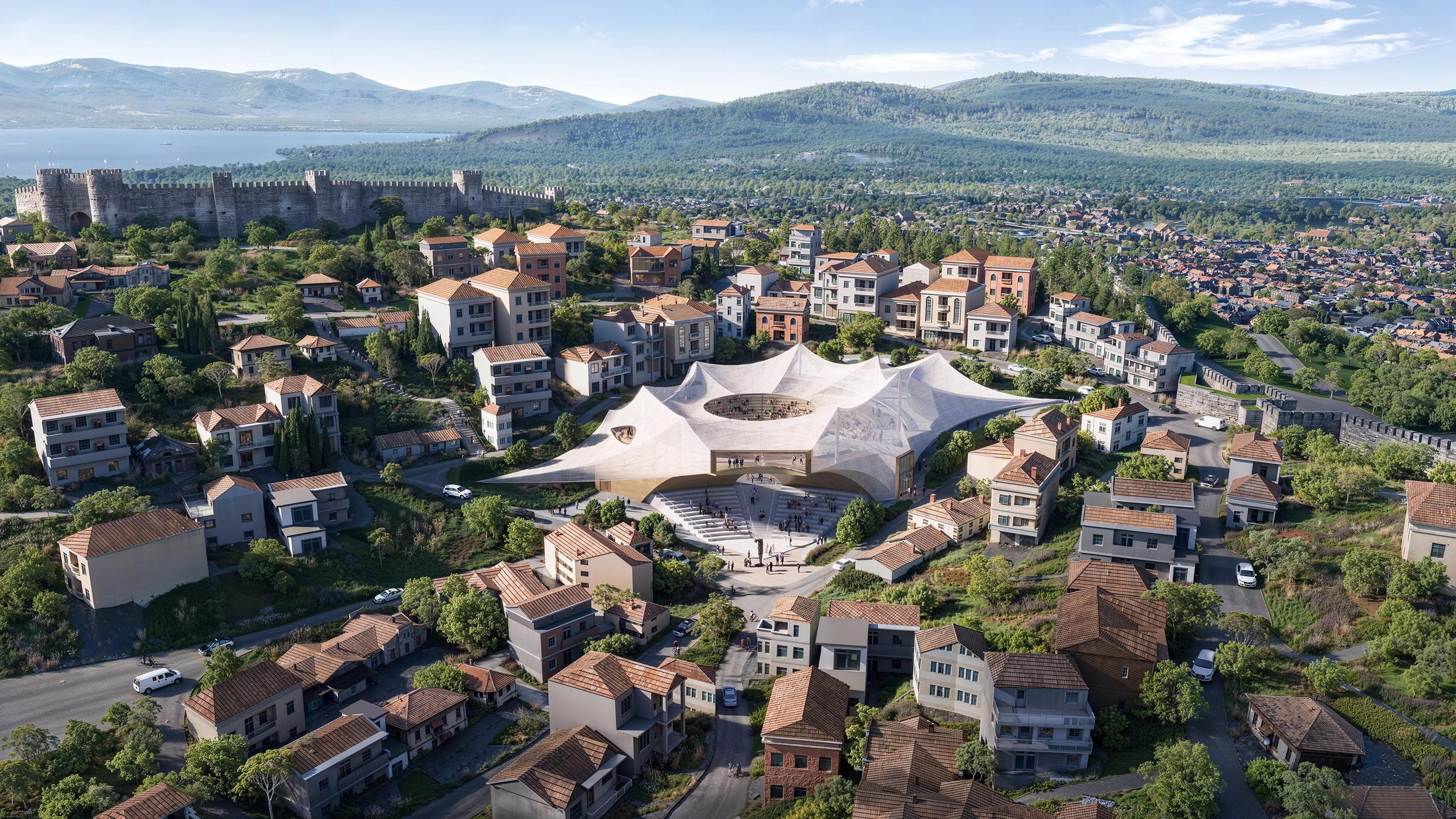
The UNESCO Ancient Theatre Revitalization repositions a deteriorated archaeological amphitheatre as a contemporary cultural campus, transforming a static historic monument into an active civic landscape while preserving its archaeological integrity. The project addresses a central challenge in heritage conservation: how to enable continuous public use, social engagement, and cultural vitality without compromising the authenticity, legibility, and material fragility of an ancient site.

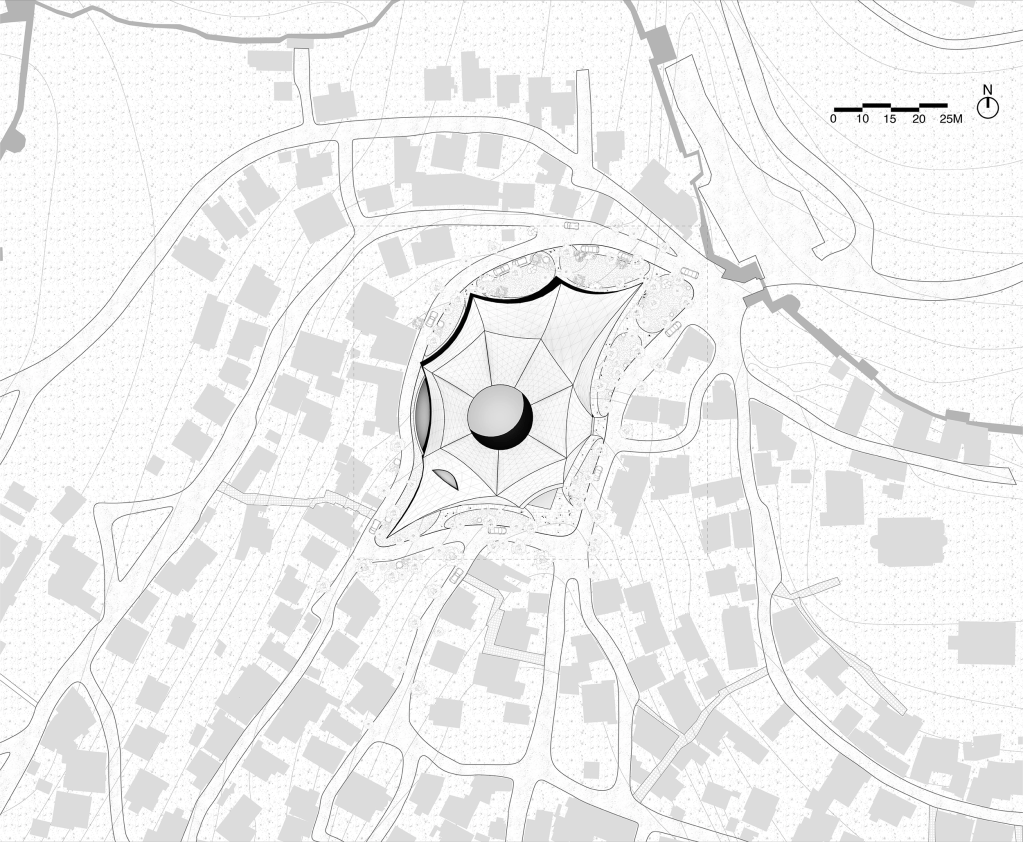
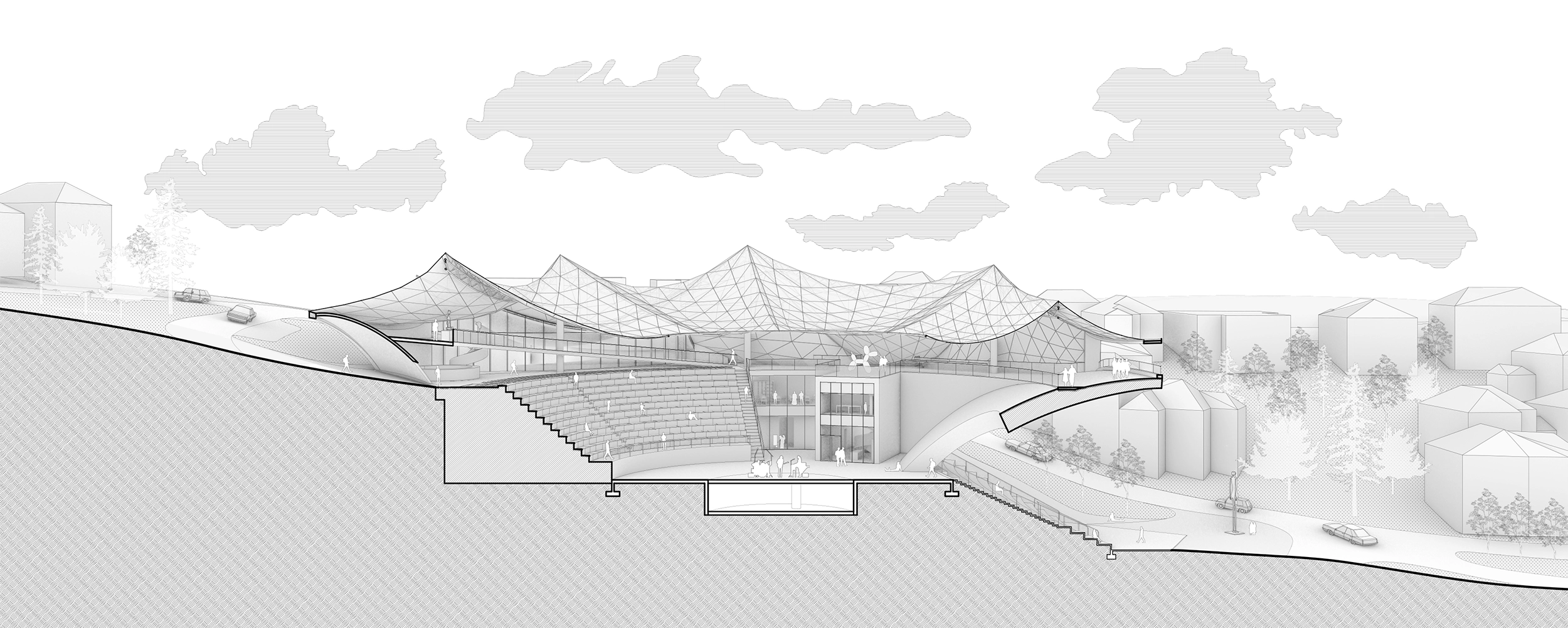
The site is defined by significant topographical variation, with the historic amphitheatre embedded at a higher elevation and surrounded by steep terrain. Rather than reshaping the land or imposing a singular architectural object, the design strategy works precisely with the existing topography, allowing spatial relationships to emerge from the site itself. The original cavea and stage are retained at their elevated position, preserving their role as the spatial, cultural, and symbolic core of the theatre and maintaining the monument’s historical primacy.

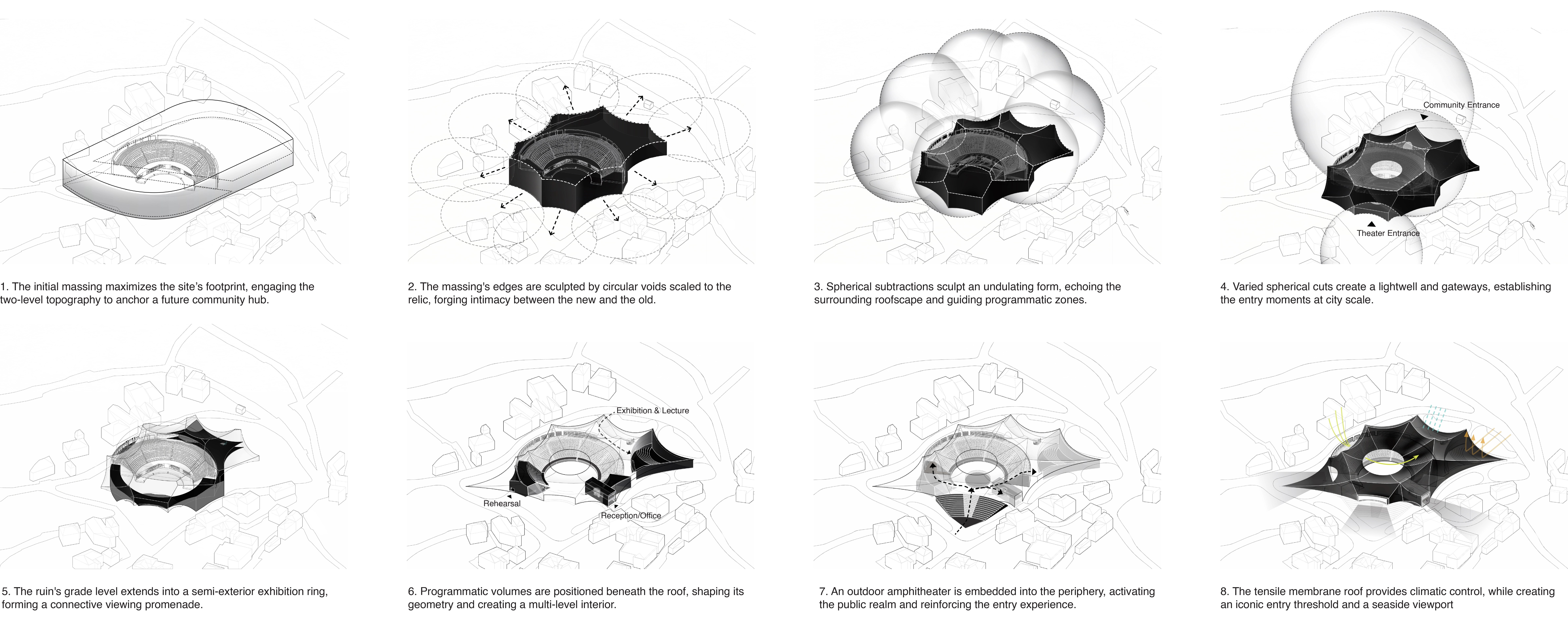
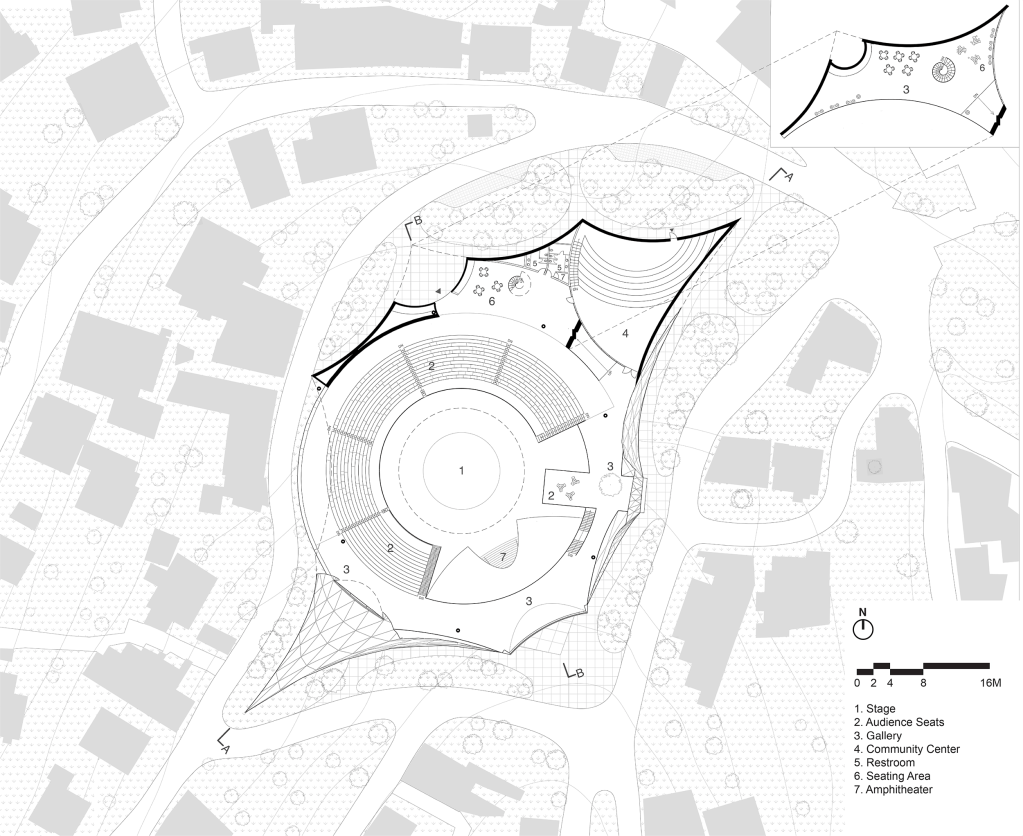
All new architectural interventions are generated from the original geometric radii of the ancient structure and positioned along the site’s perimeter as lightweight, reversible elements. This approach minimizes ground disturbance, preserves critical sightlines, and ensures a clear and legible distinction between historic fabric and contemporary additions. Instead of reconstructing or imitating the ancient architecture, the project establishes a dialogue between old and new through calibrated geometry, restrained materiality, and spatial continuity.

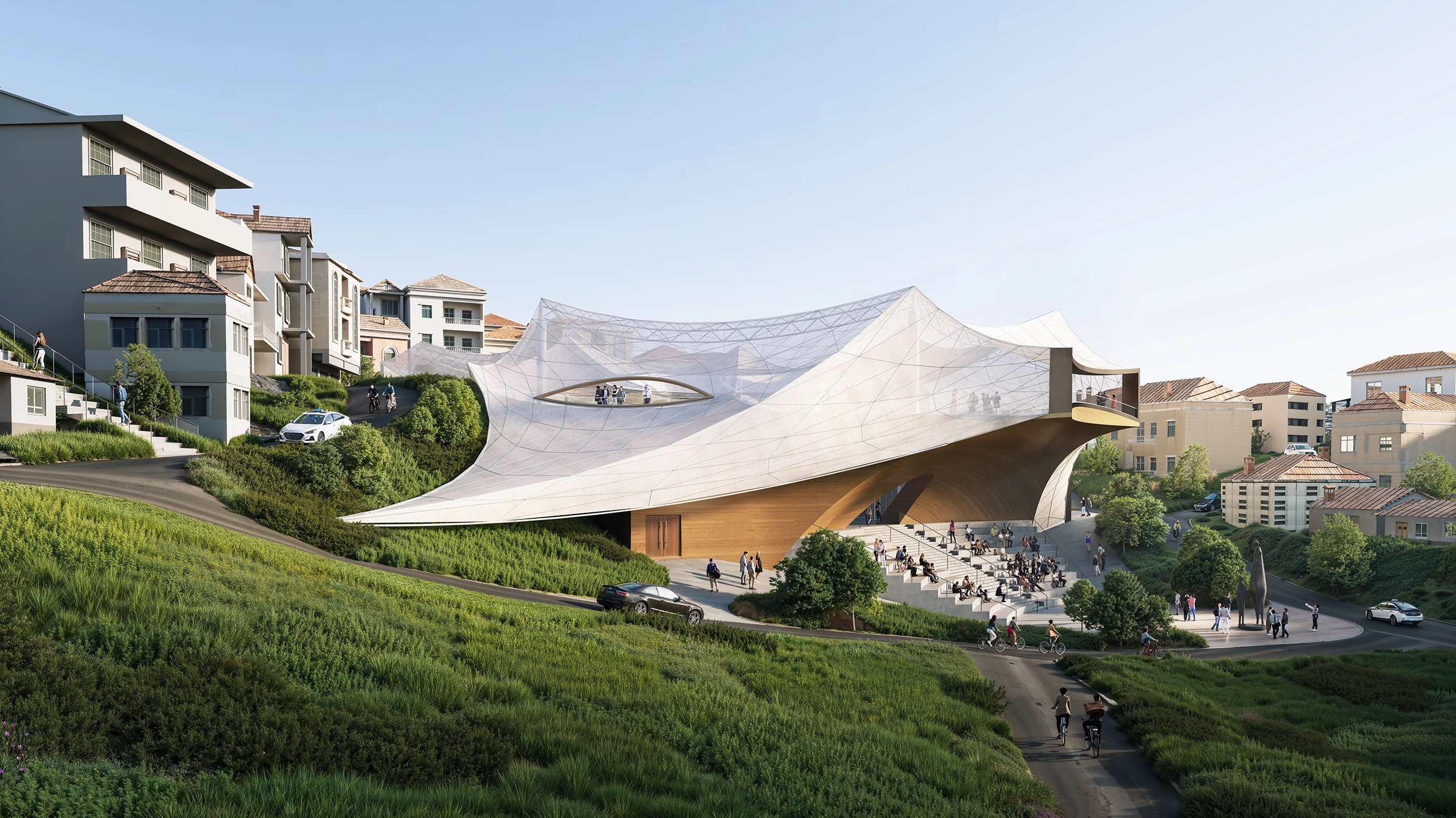
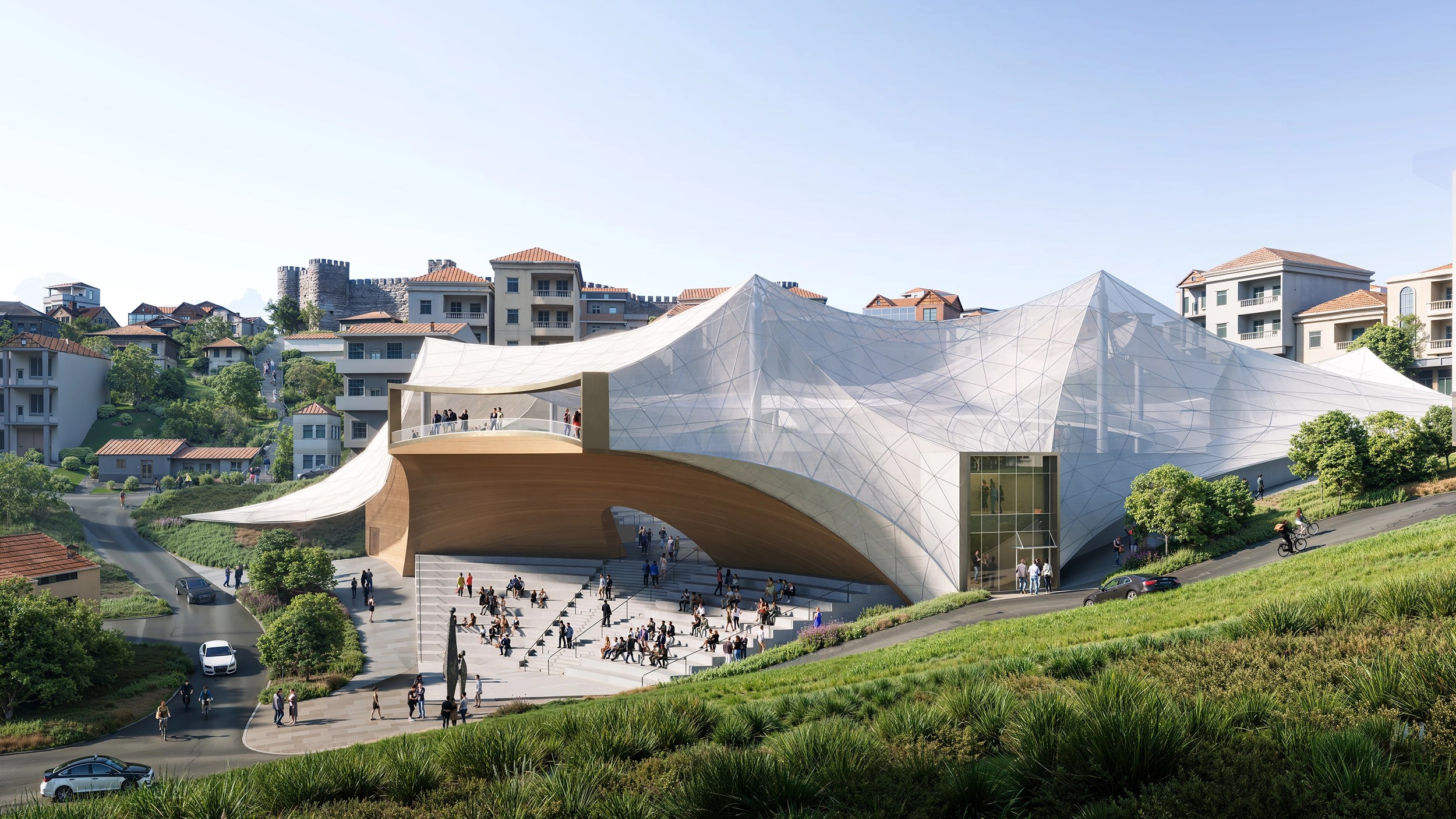
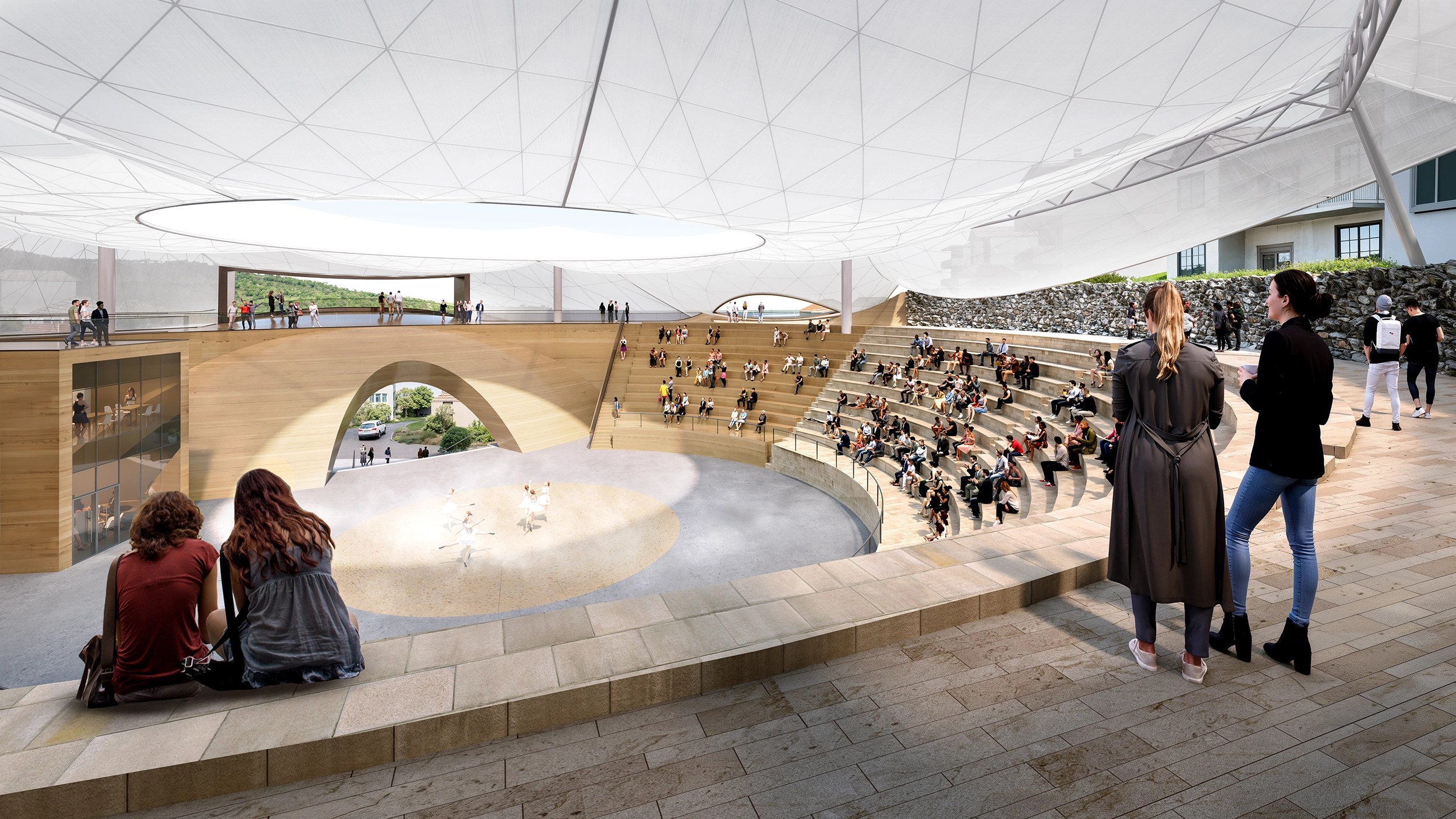
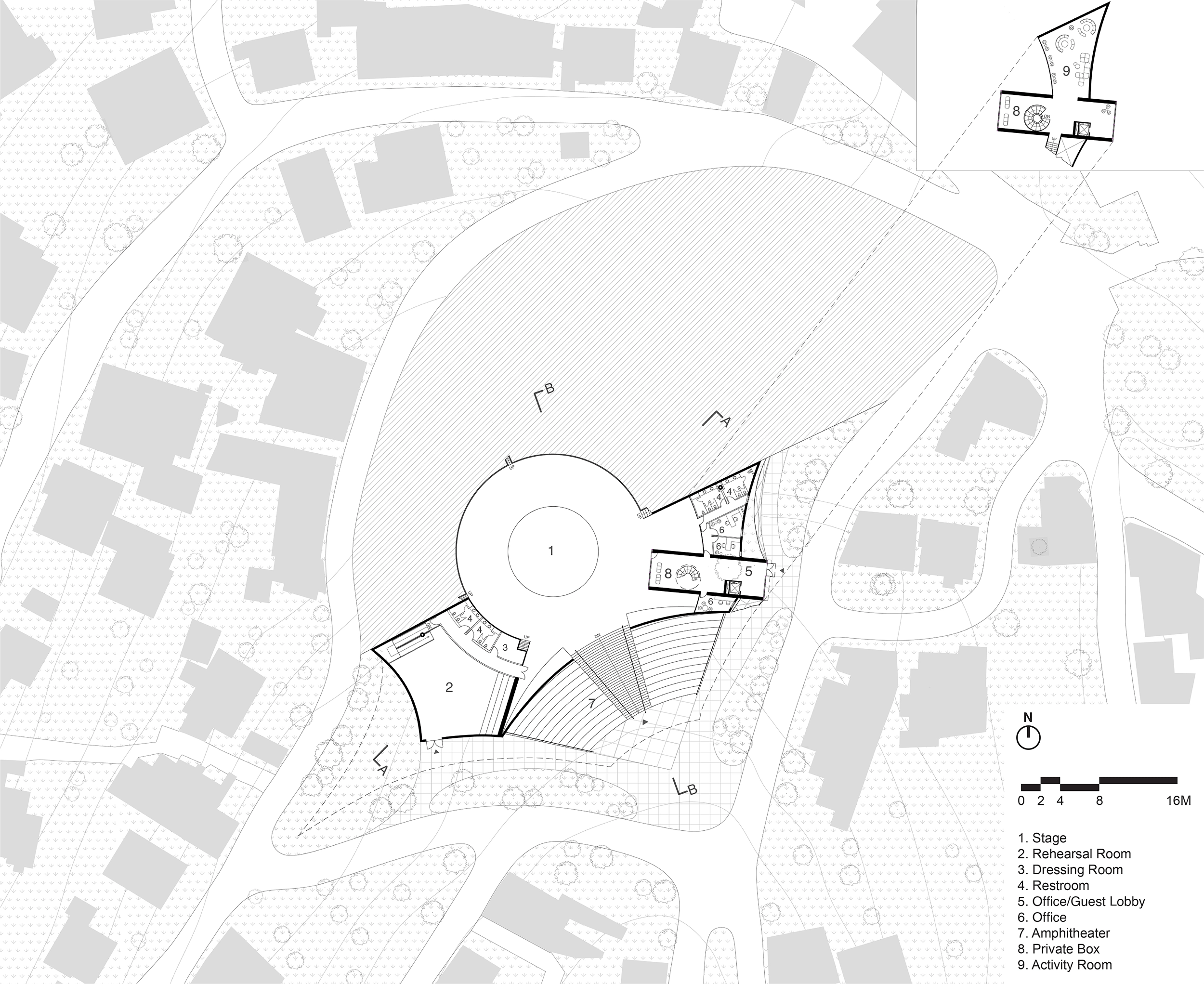
To address the site’s pronounced vertical complexity, a secondary semi-open amphitheatre is introduced at a lower elevation. This new structure establishes a carefully calibrated spatial dialogue with the historic seating positioned above. While the original amphitheatre continues to host formal performances, exhibitions, and ceremonial gatherings, the lower semi-open amphitheatre is intentionally conceived as an informal, accessible civic platform—designed to welcome everyday use beyond scheduled cultural events.

Positioned at the most approachable level of the site, the semi-open amphitheatre lowers the threshold for entry and encourages spontaneous gathering, social interaction, and prolonged occupation by local residents and visitors alike. Its open configuration allows people to sit, meet, pass through, or linger without the obligation of attending a formal performance. Together, the elevated historic theatre and the grounded contemporary amphitheatre form a clear civic axis that links ritualized cultural programming with the rhythms of daily urban life, transforming the site from a monument visited occasionally into a continuously inhabited public landscape.

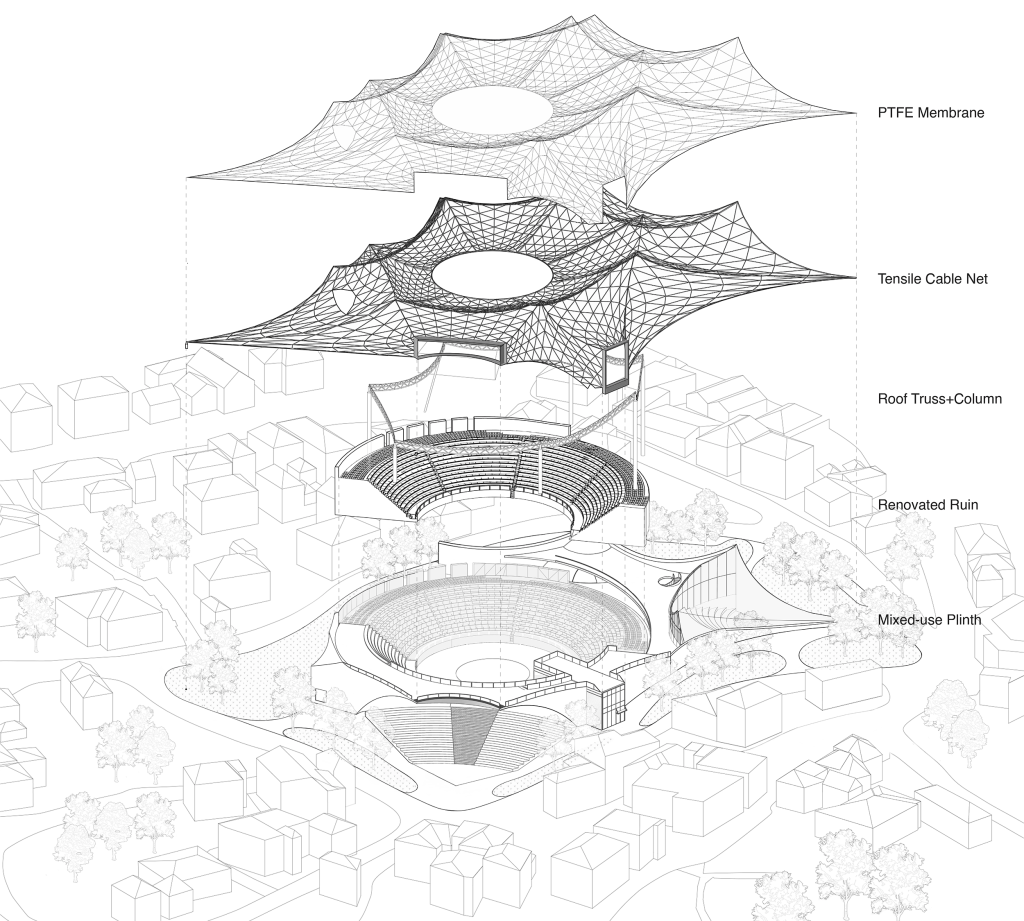
Above the semi-open amphitheatre, a lightweight hemispherical cantilever extends outward to define both the spatial and symbolic center of the intervention. More than a climatic shading device, this suspended form acts as a welcoming architectural gesture, clearly signaling public access and inviting people into the space from the surrounding urban fabric. The cantilever frames the entrance as a generous threshold, guiding movement while offering comfort and protection from the elements.

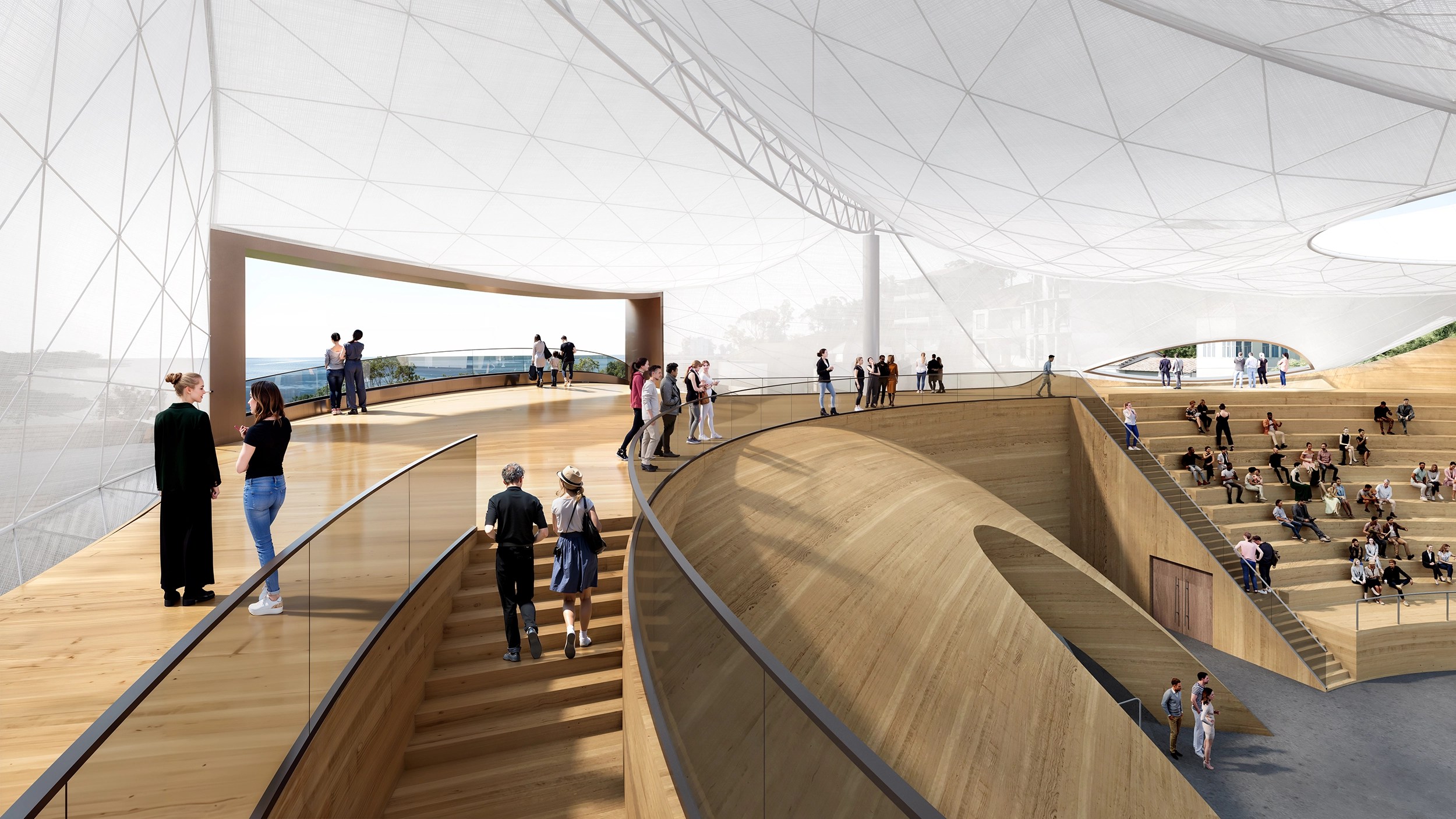
By providing shade and spatial definition, the cantilevered canopy encourages people to pause, gather, and remain on site. It transforms the entrance into a civic foreground rather than a controlled point of access, supporting informal social encounters and everyday use. The semi-transparent roof structure further reinforces this openness by maintaining visual continuity between interior activity and the public realm. Cultural events, rehearsals, and informal gatherings remain perceptible from outside, allowing passersby to visually engage with the life of the theatre before entering.

This visual permeability reduces the psychological distance often associated with traditional enclosed theatres and fosters a sense of familiarity and approachability. The amphitheatre no longer reads as an isolated cultural institution, but as a shared civic space that welcomes participation and encourages exploration. As a recognizable yet restrained landmark, the cantilevered canopy attracts attention without overpowering the historic fabric. Its curved profile draws the eye, sparks curiosity, and invites the public to enter, gather, and engage.

At night, the softly illuminated semi-transparent roof transforms the amphitheatre into a subtle civic lantern, signaling renewed cultural activity while avoiding excessive monumentality. The lightweight presence of the new intervention ensures that the historic amphitheatre remains dominant, while the contemporary structure communicates its role as an active, accessible, and community-oriented public space.

Circulation throughout the site is organized by a continuous exhibition ring that traces the perimeter of the ancient theatre. This ring structures the visitor experience as a layered sequence of movement, pause, and observation, allowing history to be encountered gradually rather than as a static object. Along this route, new programs—including rehearsal spaces, conference facilities, offices, a VIP suite, and auxiliary performance areas—are introduced as carefully scaled volumes. Their massing and placement remain subordinate to the historic fabric while significantly expanding the site’s functional capacity.

Technical infrastructure and back-of-house systems are discreetly integrated to support year-round cultural programming. The architectural strategy prioritizes adaptability and long-term use, enabling the site to host performances, exhibitions, educational programs, and informal community activities without placing undue stress on the ancient structure.

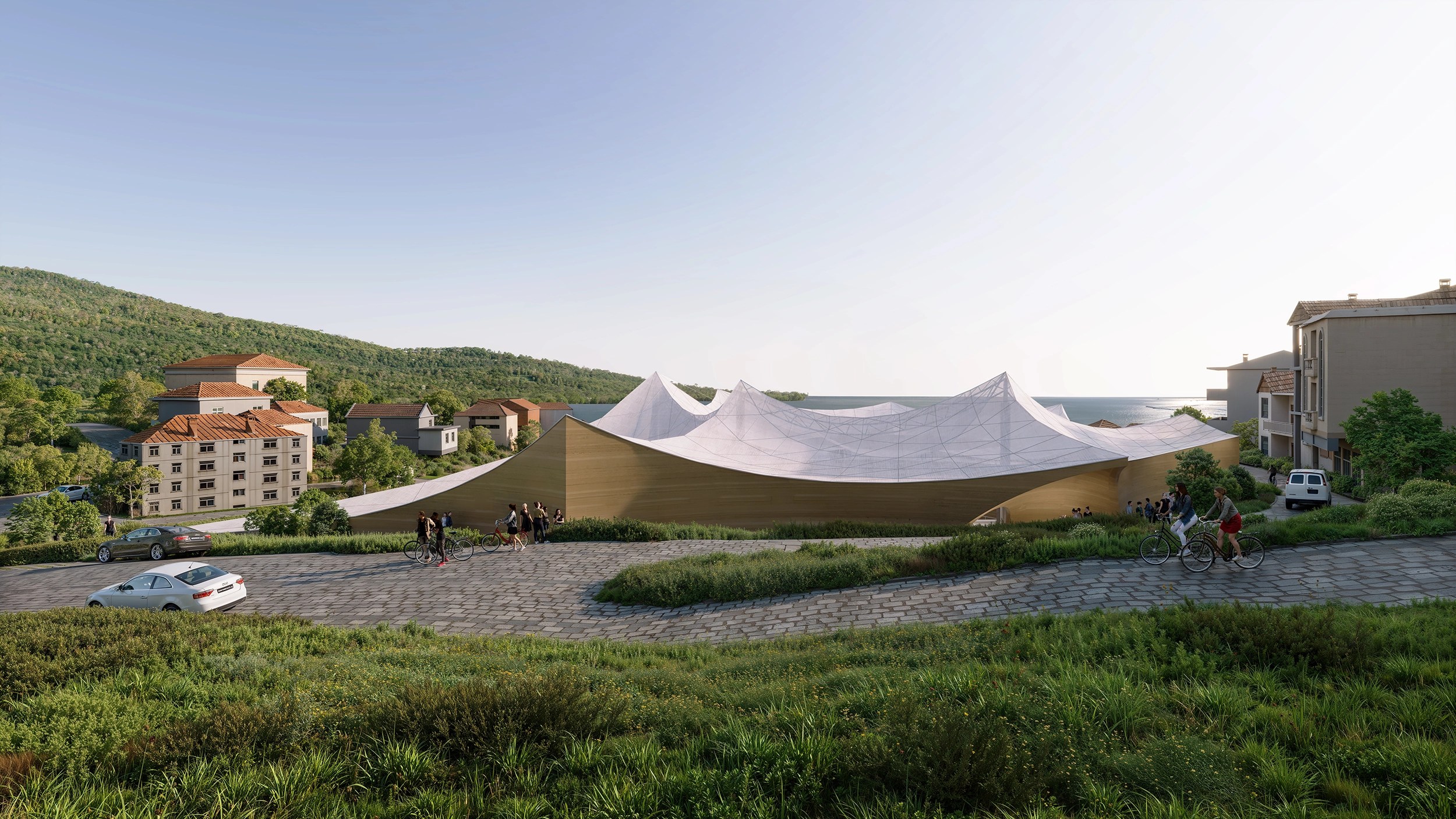
Environmental sustainability is embedded through climate-responsive design strategies rather than mechanical dependency. The semi-transparent canopy filters daylight, reduces solar gain, and protects sensitive stone surfaces while preserving visual lightness. Multiple openings and carefully positioned roof vents enable cross-ventilation and stack-effect cooling, enhancing thermal comfort and reducing reliance on mechanical systems. This porous architectural configuration supports both material preservation and a richer sensory experience for users.

Through minimal intervention and deliberate activation of public life, the project demonstrates how archaeological heritage can be preserved while serving contemporary civic needs. By layering new social spaces beneath and alongside the historic amphitheatre—rather than imposing upon it—the revitalization offers a repeatable model for adaptive reuse that integrates heritage conservation with public accessibility, urban regeneration, and long-term cultural sustainability. The ancient theatre is reclaimed not only as a site of memory, but as a living civic infrastructure reintegrated into the social, cultural, and spatial fabric of the city.
Type

Area

Location

Year

Phase

Team
Cultural

4,300 M²

 Ilindenska 59, Ohrid 6000, North Macedonia

2025

Competition

Dingdong Tang,  Zehui Li, Haisheng Xu, Yangqi Yang
Concept:
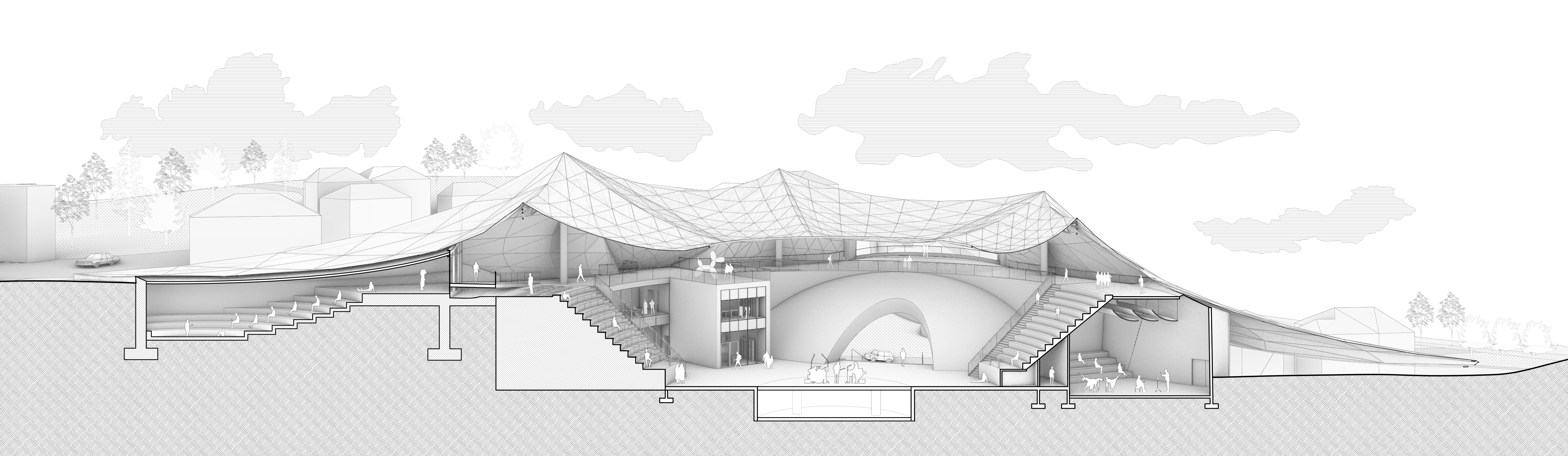
A-A Section
 LYT-X STUDIO